
How our guides read the aurora forecast in Tromsø
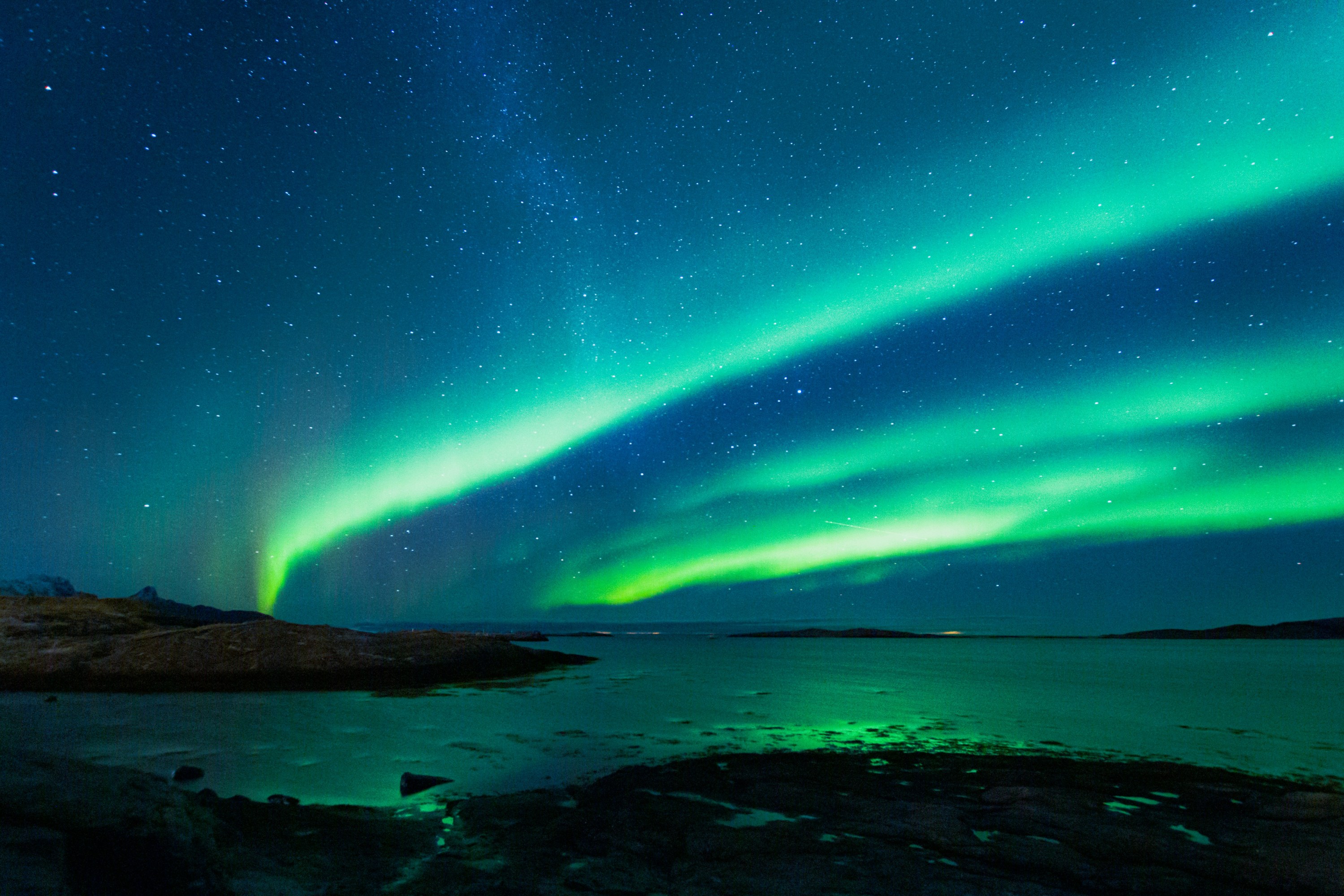
Our guides read the northern lights forecast in Tromsø by combining satellite cloud data, real-time weather models and local microclimate knowledge.
That is quite different from opening an app, seeing a KP number and deciding whether to go out. This article explains how the forecast is read on our Northern Lights Tour: what each source tells a guide, why the cloud matters more than most visitors expect, how the plan changes during the night, and what it means for you when you choose your dates. We have been doing this since 2018, and it still comes down to one honest fact: the aurora cannot be guaranteed, but the sky can be searched for.
Quick facts: Northern Lights Tour
- Ages: Ages 7+ Recommended
- Duration: 5-8 Hours
- Seasonality: Winter
- Pickup location: Outside Clarion Hotel The Edge (look for a black Mercedes)
- Time: Pick up at 19:00 (18:30 from 25 October)
- Group size: 2-8 guests (larger groups on request)
- Included: Local expert guide; Transportion in a premium Mercedes-Benz vehicle; Winter suit; A warm meal, snacks and hot drinks
- Price: from NOK 2,300 (see live prices in the booking calendar)
What our tour page says our guides use
Three ingredients are named on the page. Satellite cloud data. Real-time weather models. And microclimate knowledge built up over hundreds of nights in the field. Together they are the reason the page can say that apps and simple forecasts cannot replace local experience. None of it is secret technology. It is ordinary information, read by people who have used it on the same ground many times.
Before every tour the guides plan a route from the latest weather forecasts and their knowledge of the area, and they keep adjusting it during the night. The forecast is not a verdict made once at breakfast; it is a conversation with the sky that lasts the whole evening.
Layer one: where is the cloud?
For a northern lights chase, cloud is the first question, because even a strong display is invisible behind a thick layer. Satellite cloud data shows what is above the region right now, and weather models show how it is expected to move over the next hours. Put together, they answer a practical question: which direction should we drive?
Not all clouds are equal. Our tour page explains that high, thin cloud often lets the lights shine through, and that only low cloud blocks the view. The guides therefore look for the kind and height of the cloud, not just whether the map shows grey. A town that looks hopeless on a simple icon forecast may be perfectly workable.

Layer two: how the landscape changes the weather
Tromsø is surrounded by mountains and fjords, and our FAQ explains that they create multiple microclimates. A valley a short drive away can have an entirely different sky from the city centre. Clouds in Tromsø often mean clear skies one to three hours inland.
The most important feature is the Lyngen Alps, which our page describes as a weather wall that blocks moisture from the coast and gives clearer skies inland. Skibotn, Norway’s driest region, often provides the best viewing conditions, and we go there whenever needed. A model can draw a general picture of that effect, but it is local knowledge that tells a guide how reliably a particular place clears on a particular kind of night. Our posts on Skibotn and the weather wall and crossing into Finland or Sweden explain where this can lead.
Layer three: the KP number and aurora activity
Most travellers know one number: the KP index. It is a measure of geomagnetic activity, and it is easy to find in apps. But our FAQ explains why it should not decide your night. The KP index mainly shows how far south the aurora oval stretches, not how strong the northern lights will be in Tromsø. Because Tromsø lies directly under the oval, auroras are often visible even at low KP values. You can see stunning displays at KP 0 or KP 1.
So the guides treat activity as one input rather than the deciding factor. It does matter that the sun is active, but the clear sky decides whether you can see the result. Our post on the KP index in Tromsø goes into detail.
Layer four: what the guides see on the night
The last layer is the one no app can provide: looking up. Once the group is out of the city, the guides can see the sky, feel the wind and check what the cloud is really doing. They compare it with the forecast they planned from. If the sky is better to the left, they go left. If the cloud is closing in, they drive on.
This is why the length of the tour varies. It lasts five to eight hours, depending on where the chase takes you, and the tour page notes that we may sometimes need a longer drive to increase our chances. For how that fits into your evening, see how long a northern lights tour lasts.
A guide’s night in five questions
- Where is the cloud, and how high is it? Satellite data and models.
- Where is it clearing? Microclimate knowledge: the coast, the mountains, the inland valleys, the border regions.
- Is there activity? The aurora needs the sun to play its part, but low KP is not a reason to stay home.
- How far can we go and still give the group a good evening? The tour is five to eight hours, and the plan has to fit inside it.
- Has anything changed? The answer to this one keeps being updated until the last stop.

Four forecast mistakes visitors make
- Treating KP as a go or no-go switch. A low number is not a reason to cancel in Tromsø.
- Looking only at the weather in town. The clearest sky may be well outside the city, and the guides will drive there.
- Trusting a single night. One forecast, one evening and one chance is a thin plan. Several nights is a thick one.
- Cancelling late. If you want to release an extra night, do it more than 48 hours before the start, or the full amount is charged.
What this means for your booking
Because the guides do the reading, you do not need to pick the perfect night by studying a forecast. Weather beyond a few days is uncertain, and aurora activity is not predictable far ahead. What you can control is how many chances you give yourself. We recommend staying at least five nights in Tromsø and booking more than one chase. On tours we operate, cancelling more than 48 hours before departure gives a full refund, so you can add extra nights and release them once you have had a good one. See how many nights you need.
If you want to follow the forecast yourself, do it as a hobby. Look at cloud, not just KP. And do not cancel a booking because a number looks low or the town looks cloudy: if a tour is running, the guides have identified areas with good potential. If they believe there is no chance at all, they cancel and offer a refund or a new date.
Frequently asked questions
Do you use the KP index?
It is one number among many, and it does not decide the night. The page explains that Tromsø lies under the aurora oval, so lights are possible at low KP values.
What data do the guides use?
According to the tour page: satellite cloud data, real-time weather models and microclimate knowledge built up over hundreds of nights in the field since 2018.
Can an app tell me where to go?
Apps can be interesting, but our tour page says apps and simple forecasts cannot replace experience. Our FAQ adds that guided tours outperform self-driving in winter, because local knowledge, flexibility and safety make a real difference.
What if the forecast is bad for my whole trip?
Forecasts change quickly in the Arctic. Book several nights, and let the guides decide each evening whether the sky has potential.
Will you tell me before the tour whether it is going ahead?
If we believe there is no chance of seeing the lights, we cancel and offer a full refund or rebooking. If the tour runs, it means the guides have found areas with good chances.
Book a chase led by people who read the sky
Choose your evenings in the live calendar, add a second night if you can and book directly for secure online payment and small groups of two to eight guests.