
Skibotn northern lights: the Lyngen weather wall
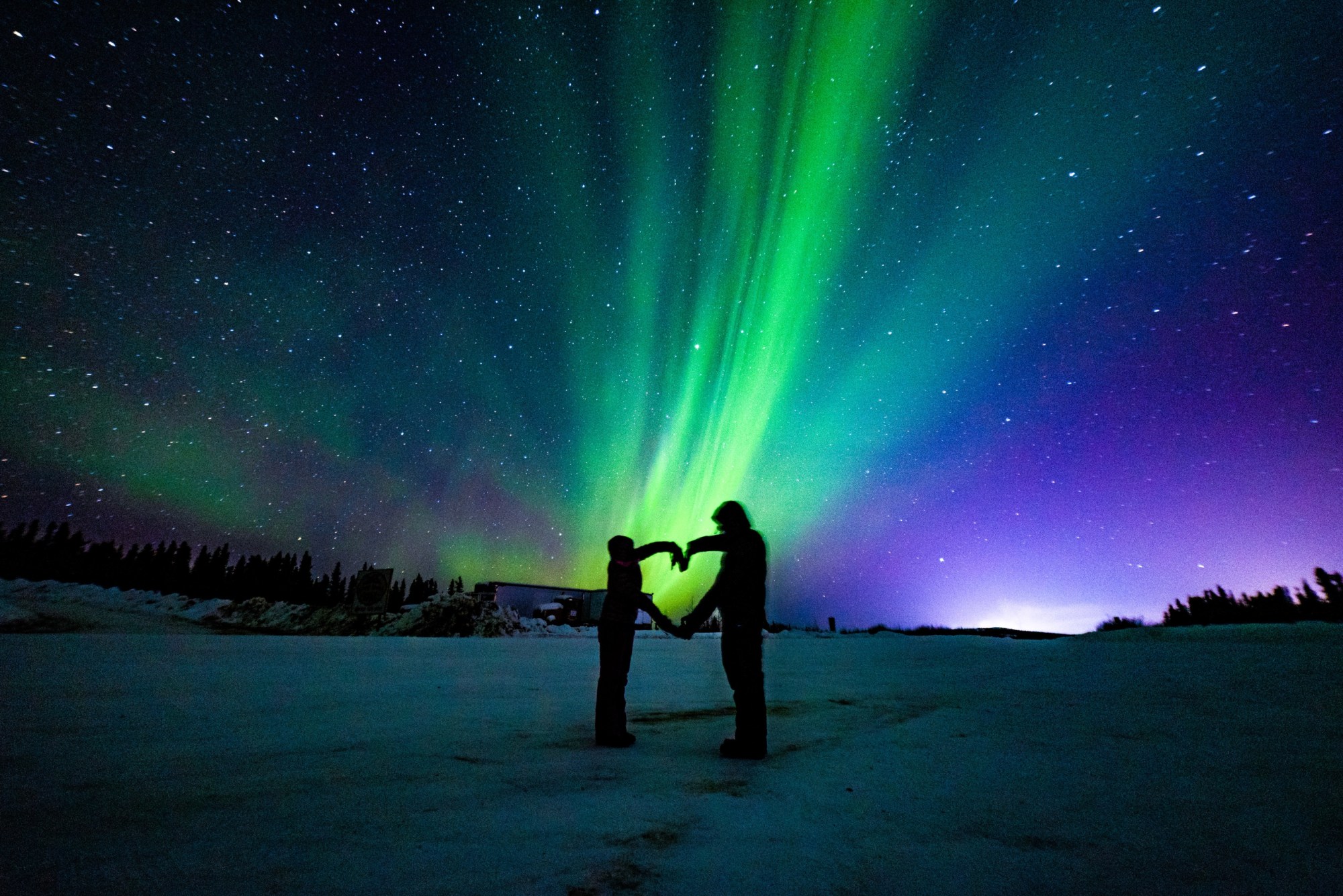
Skibotn is Norway’s driest region, and the Lyngen Alps act as a weather wall in front of it, which is why our guides head there for clear northern lights skies.
If you have read about northern lights chases from Tromsø, you will have seen the name Skibotn. This guide explains the geography behind it in plain language: what a weather wall is, why clearer skies often sit inland, how Skibotn fits into a night on our Northern Lights Tour, and what you can and cannot expect. We go there whenever it is needed, and not on every tour. The aurora is a natural phenomenon and is never guaranteed.
Quick facts: Northern Lights Tour
- Ages: Ages 7+ Recommended
- Duration: 5-8 Hours
- Seasonality: Winter
- Pickup location: Outside Clarion Hotel The Edge (look for a black Mercedes)
- Time: Pick up at 19:00 (18:30 from 25 October)
- Group size: 2-8 guests (larger groups on request)
- Included: Local expert guide; Transportion in a premium Mercedes-Benz vehicle; Winter suit; A warm meal, snacks and hot drinks
- Price: from NOK 2,300 (see live prices in the booking calendar)
What a weather wall does
In simple terms, mountains change the weather around them. Moist air from the sea is pushed up against a mountain range, cools as it rises and drops its moisture as cloud and precipitation on the sea side. By the time the air has crossed the mountains, much of that moisture has gone, and the sky on the far side tends to be clearer.
Our tour page uses exactly this idea. The Lyngen Alps create a unique weather wall, blocking moisture from the coast and giving clearer skies inland. For a northern lights chase, this is the whole story in one sentence: if there is cloud on the coast, the best chance is often on the other side of the wall.

Why Skibotn comes up so often
Skibotn is inland, behind the Lyngen Alps, in a valley close to the Finnish border. Our tour page calls it Norway’s driest region and says it often provides the best viewing conditions. That combination, dry air plus mountains between you and the coast, is why it is one of the places the guides think of first when Tromsø looks cloudy.
Three reasons make it a natural destination for a chase:
- Fewer clouds. A dry region simply has more clear nights than a damp coast.
- Distance from Tromsø’s weather. Our FAQ notes that cloud in the city often means clear skies one to three hours inland, and Skibotn sits well within that kind of range.
- Room to move. From the valley the guides can keep adjusting. If the best sky shifts, they can drive on, including towards Finland or Sweden. Our post on crossing into Finland or Sweden covers that side of the chase.
“We go there whenever needed”
The wording on the tour page matters: the guides go to Skibotn whenever needed. That is different from saying every tour ends up there. The route is planned before the tour from the latest weather forecasts and the guides’ knowledge of the area, and then adjusted through the night.
On a night when the sky above Tromsø is open and the forecast looks good, there is no reason to drive far. On a night when low cloud covers the coast, the long drive to a drier region is exactly the right call. Either way, the decision follows the sky. That is the difference between a chase and a fixed viewpoint.
Three nights, three possible routes
These are illustrative examples of how a guide might think, not descriptions of specific nights.
| Situation | What it points to |
|---|---|
| Low cloud covers Tromsø and the coast, with a drier forecast inland | A longer drive over the mountains towards a drier region such as Skibotn |
| Sky open near Tromsø, only thin high cloud | A shorter drive, because thin cloud can let the lights shine through |
| Cloud everywhere nearby, clearer sky further across the border | The guides may keep driving into Finland or Sweden |
In every case the guides are balancing time in the vehicle against the quality of the sky. Our tour lasts five to eight hours, so the plan has to fit inside that evening.
How guides read the cloud
Our guides have been doing this since 2018. They use satellite cloud data, real-time weather models and microclimate knowledge built up over hundreds of nights in the field. Satellite imagery shows where the cloud actually is, weather models show where it is heading, and local experience fills in what no model can see: which valley tends to stay open, and which stays shut. Our tour page says that apps and simple forecasts cannot replace that experience.
You can follow the same logic at home, if you enjoy it. Look at a cloud map the afternoon before and ask where the gaps are. But remember that conditions change fast in the Arctic, and the map you looked at after lunch may be out of date by the time of pick-up. Our post on cloudy nights in Tromsø shows why the guides do not give up on a grey forecast.
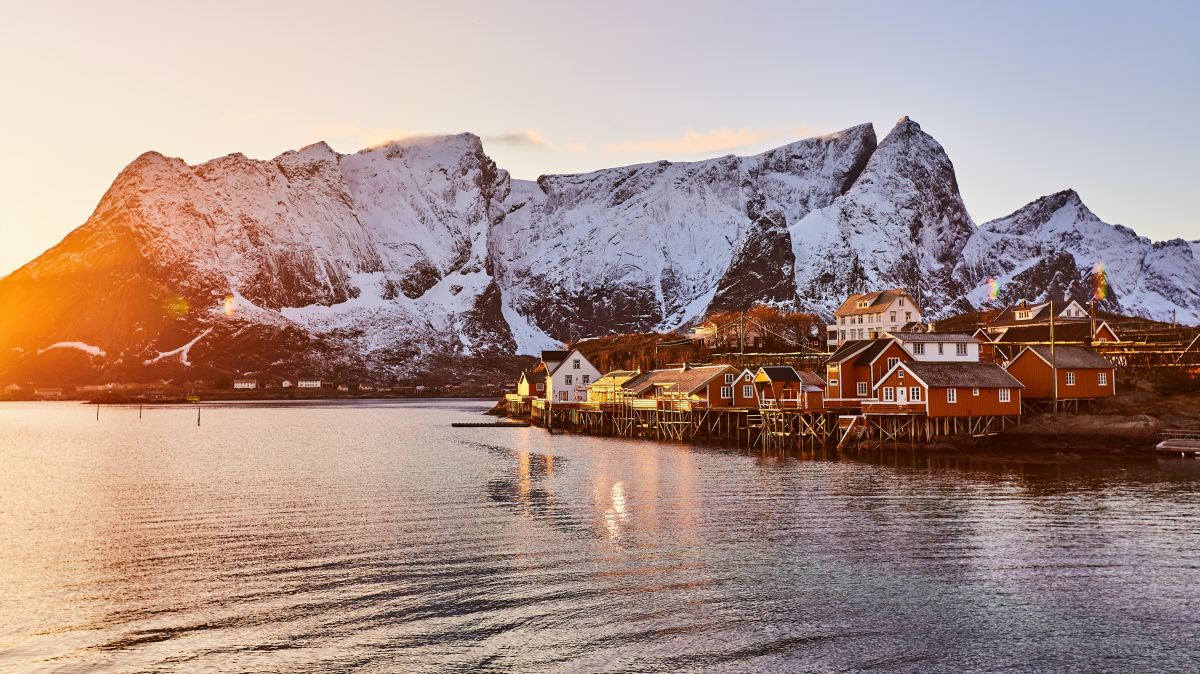
The Lyngen Alps beyond the aurora
The mountains that shield Skibotn are also one of our favourite winter playgrounds. The Lyngen Alps are where we run guided ski touring and ski packages, with peaks rising straight from the fjords. If you are curious about the range by day, see our Lyngen Alps page and the post on ski touring in the Lyngen Alps with a guide. The same terrain that makes the weather behave so differently inland is what makes the skiing memorable, and it is a good reminder that the Arctic here is not one climate but many, packed into a short distance.
What a Skibotn night asks of you
- Time. A drive inland adds time to the evening. The tour lasts five to eight hours depending on where the chase takes you.
- Patience. Even with clear skies, the aurora needs activity. A clear sky is the stage, not the show.
- Warm layers. You get a winter suit on the tour, and you should wear wool underneath. A warm meal, snacks and hot drinks are included.
- Planning ahead for the toilet. Once you leave the city, toilet access is limited. The guides carry toilet paper and wet wipes.
- An open mind about the KP number. Tromsø lies under the aurora oval, so you can see impressive lights at KP 0 or KP 1. Read why in the KP index explained.
If a long drive does not appeal, the four-hour Aurora Snowshoe Hike is the active alternative; the comparison of hike and chase can help. If you want your own group to decide the pace, look at the private northern lights tour.
Skibotn is a bonus, not a promise
The honest picture is that a drier region improves your odds of a clear sky, but it does not make the aurora appear. A clear sky without solar activity is only a good place to look at stars. There are no refunds or free tours if the lights do not show, and if the guides believe there is no chance at all, they cancel and offer a refund or a new date.
That is why the best plan is not a single perfect night but several chances. We recommend staying at least five nights and booking more than one chase, cancelling extras more than 48 hours before departure for a full refund. See how many nights you need.
Frequently asked questions
Where is Skibotn?
It is inland from Tromsø, behind the Lyngen Alps and close to the Finnish border. The guides decide on the night whether to go there.
Does every northern lights tour go to Skibotn?
No. The tour page says we go there whenever needed, and the route is adjusted to the sky on the night.
Why is Skibotn good for northern lights?
Our tour page calls it Norway’s driest region and says it often provides the best viewing conditions, helped by the Lyngen Alps blocking moisture from the coast.
Where does the tour start?
Outside Clarion Hotel The Edge in Tromsø, where you look for a black Mercedes. Pick-up is at 18:30 from 25 October.
Can I choose Skibotn in advance?
The route is chosen for the best chances on that night. The private northern lights tour gives you more say over the evening.
Book a chase that follows the clear sky
Choose your evenings in the live calendar and let the guides do the weather reading. Booking directly gives you secure payment, small groups and free cancellation more than 48 hours before departure.