
What to wear for whale watching in Tromsø
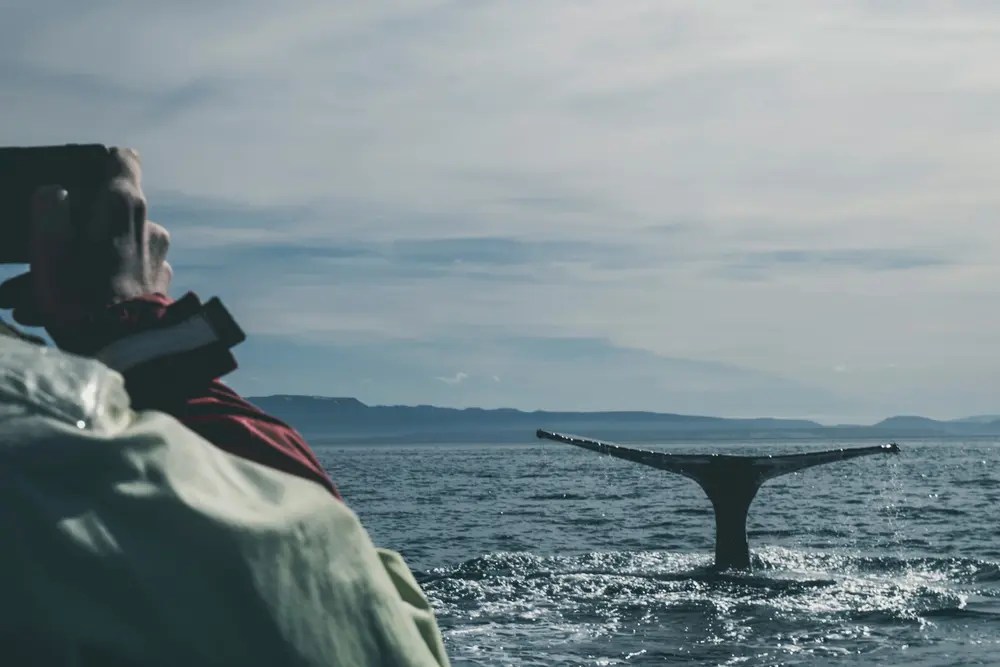
For whale watching from Tromsø, wear warm layers with wool next to your skin, a wind-resistant outer layer, and a hat, warm gloves and a neck gaiter on top. The tour page for our Private Whale Watching charter is short and clear on this: warm clothes, warm gloves, a hat or beanie, and a buff or neck gaiter.
That list is the minimum, and this post turns it into a plan you can pack from. The day is long (seven to eight hours), the water is open, and part of it is spent on deck, so the layers you choose matter more than any single item. Below you will find what the page says, how to build the layers, what changes between the lounge and the deck, and what to ask us before you add the optional orca snorkelling.
Quick facts: Private Whale Watching
- Ages: All Ages
- Duration: 7-8 Hours
- Seasonality: October – January
- Pickup location: Fredrik Langes gate 2, 9008 Tromsø
- Group size: Maximum 12 people
- Included: Local guide/skipper; Boat charter; Lunch and snacks; Snorkelling with orcas (optional)
- Price: from NOK 120,000 (see live prices in the booking calendar)
What the tour page tells you to bring
The “What to bring” section on the tour page lists four things:
- warm clothes;
- warm gloves;
- a hat or beanie;
- a buff or neck gaiter.
The “Includes” list covers a local guide and skipper, the boat charter, and lunch and snacks. It does not mention a winter suit or boots. Some of our other tours do supply thermal suits, so it is worth being clear about this one: on the whale watching charter, plan to bring your own warm clothing rather than expecting to be given it at the pier.
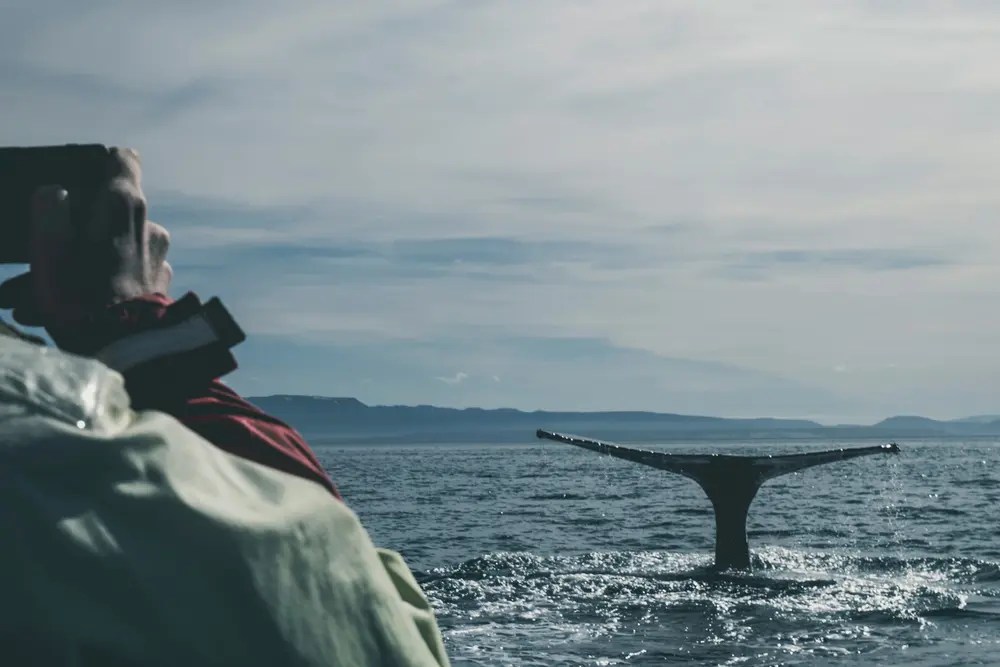
Build your outfit from the skin outwards
Our general advice for Arctic tours is the same layering system we give for every winter activity. Start next to the skin and work outwards:
- Base layer: wool. Wool closest to your skin is the single most useful choice. Avoid cotton, which does not keep you warm in Arctic conditions.
- Mid-layer: wool or fleece. A warm sweater or fleece traps the heat your base layer holds in. This is the layer you take off or put back on as you move between the lounge and the deck.
- Outer layer: wind- and water-resistant. On a boat the wind is the main enemy, so a proper shell over your warm layers makes the biggest difference.
- Head, neck and hands. A warm hat, a buff or neck gaiter and warm gloves or mittens. The tour page asks for all three.
- Feet. Insulated winter boots and warm socks. Standing still on a deck is colder than walking, and feet feel it first.
For the full layering system, with fabric choices explained, read our complete guide to dressing for the Arctic.
Lounge or deck: how the boat changes what you wear
The vessel on this charter is a premium catamaran with spacious indoor lounges and outdoor decks, and the page describes the ride as smooth and stable. That is good news for comfort, but it also means your day alternates between two very different temperatures.
Inside, you can warm up with lunch, snacks and warm drinks. Outside, you are standing in the open when someone spots a blow or a tail. Dress so you can be comfortable in both:
- keep your mid-layer easy to remove, so you do not overheat in the lounge;
- keep your hat, neck gaiter and gloves within reach rather than packed away, because you will want them quickly when you go out;
- wear an outer layer that you can zip all the way up in seconds.
Open water usually feels colder than the same air temperature on land because of wind, so err on the side of one more layer than you would wear for a city walk. You can always take it off inside.
Five mistakes that make a whale day colder
These are the usual slips, drawn from our general clothing advice for the Arctic:
- Wearing cotton. A cotton T-shirt or jeans holds moisture and feels cold quickly.
- Packing thin gloves. The page says warm gloves. Fashion gloves are not that.
- Skipping the neck gaiter. It weighs almost nothing and covers a gap that wind finds immediately.
- Tight boots. Thick socks in a tight boot squeeze out the warm air. Leave room.
- Leaving your camera battery cold. Cold drains batteries quickly, so keep a spare inside a jacket pocket against your body.
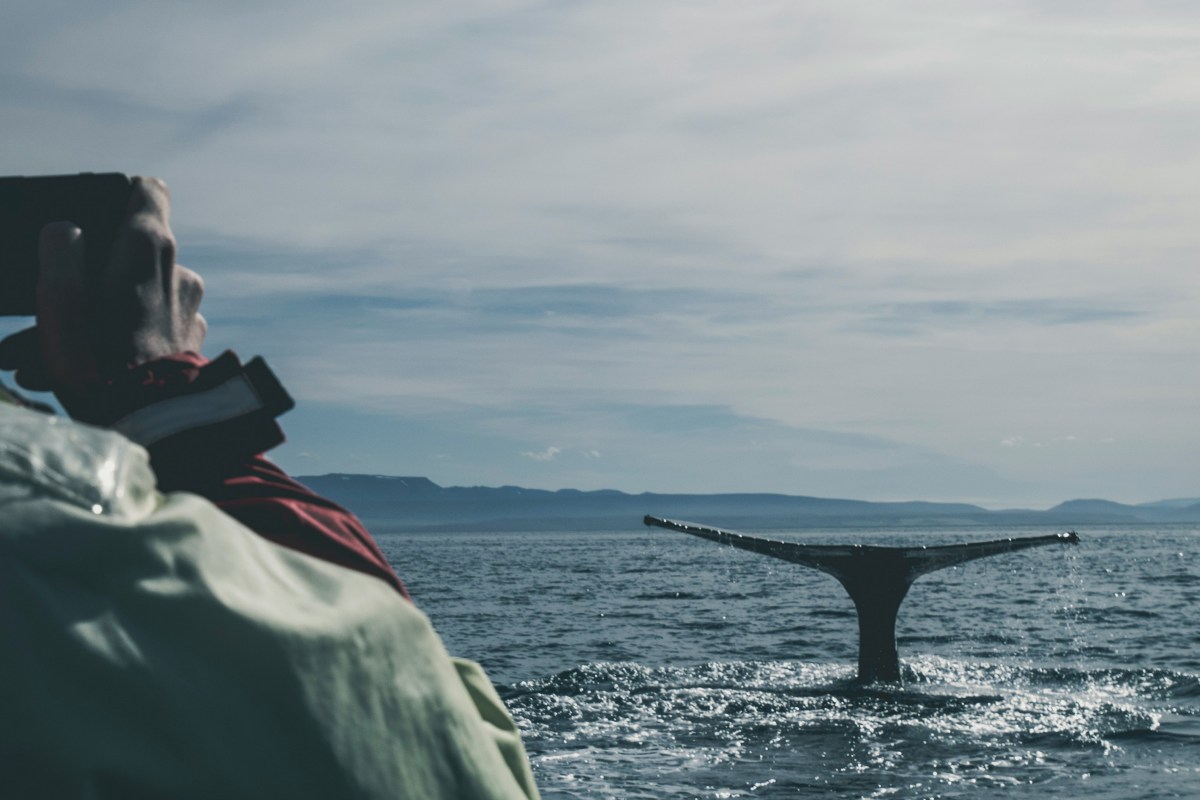
Early start, short days: dressing for the season
The tour runs from October to January and starts at 08:30 from Fredrik Langes gate 2 in Tromsø. Our FAQ describes November to January as the time of snow-covered landscapes, the polar night and dramatic Arctic light. That means long days are not what you should expect. In the darkest weeks, daylight is limited, so you will spend much of the charter in low light. Pack for the colder end of what you expect, because you can always remove a layer on board.
If you want to know when the whales are around and what to expect, our post on the whale watching season near Tromsø covers the timing. Whales are wild animals, so sightings are never guaranteed. The page says Northern Norway is one of the world’s top whale watching destinations in winter, when whales gather to feed on herring, and that we maximise your chances while respecting their environment.
Snorkelling with orcas: ask us before you add it
The charter includes an optional upgrade to snorkel with orcas and humpback whales. The tour page does not describe the equipment or clothing for this part of the day, so we do not want to guess here. If you are interested, contact us before you book through the contact page and ask exactly what is provided and what you should bring. The question to ask is simple: what do I wear, and what do you supply?
Who the private charter suits
This is a private tour, with a maximum of 12 people, for all ages. The page says it is tailored entirely to you and your group, which makes it a natural fit for families, couples and special occasions. Because it is private, you can also choose how you dress for comfort rather than to match a group. If you are comparing it with a shared trip, read private whale watching for your group.
The price shown on the page is from NOK 120,000 per private tour. The live booking calendar shows the current price for your date, and you pay securely online when you book.
Cancellation, weather and honest expectations
The cancellation policy on this tour is different from our shorter tours, so read it before you book:
- more than 14 days before the tour date: full refund;
- 7 to 14 days before: 50% refund;
- less than 7 days before: no refund.
If we cancel because of weather, sickness, accident or other reasons, you receive a 100% refund or, if you prefer, a new day. The captain monitors the weather closely and adjusts the route to keep the ride smooth. Good clothing cannot change the weather, but it does change how much of the day you enjoy.
Frequently asked questions
Do I get a winter suit on the whale watching charter?
The tour page does not list one in what is included. It asks you to bring warm clothes, warm gloves, a hat or beanie and a buff or neck gaiter. If you are unsure, ask us before you travel.
Is it warm inside the boat?
The catamaran has spacious indoor lounges where you can relax with lunch, snacks and warm drinks, plus outdoor decks. Dress for the deck and take layers off inside.
Can I wear jeans?
We advise against cotton in Arctic conditions. Wool base layers and warm, wind-resistant outerwear are far more comfortable on the water.
What time does it start and where do we meet?
The start time is 08:30 and the pick-up location is Fredrik Langes gate 2, 9008 Tromsø, as shown on the tour page.
Will we see whales?
We cannot promise it. The tour is designed to maximise your chances in the season when whales gather in the fjords, but wildlife is never guaranteed.
Is the tour suitable for children?
The page lists all ages. Dress children in the same layers as adults, with a hat, neck cover and warm gloves.
Book your private whale watching day
Pack the layers, bring the gloves, and leave the rest to the crew. Pick your date in the live calendar and secure your private charter between October and January.