
Staying warm on a Tromsø snowshoe hike
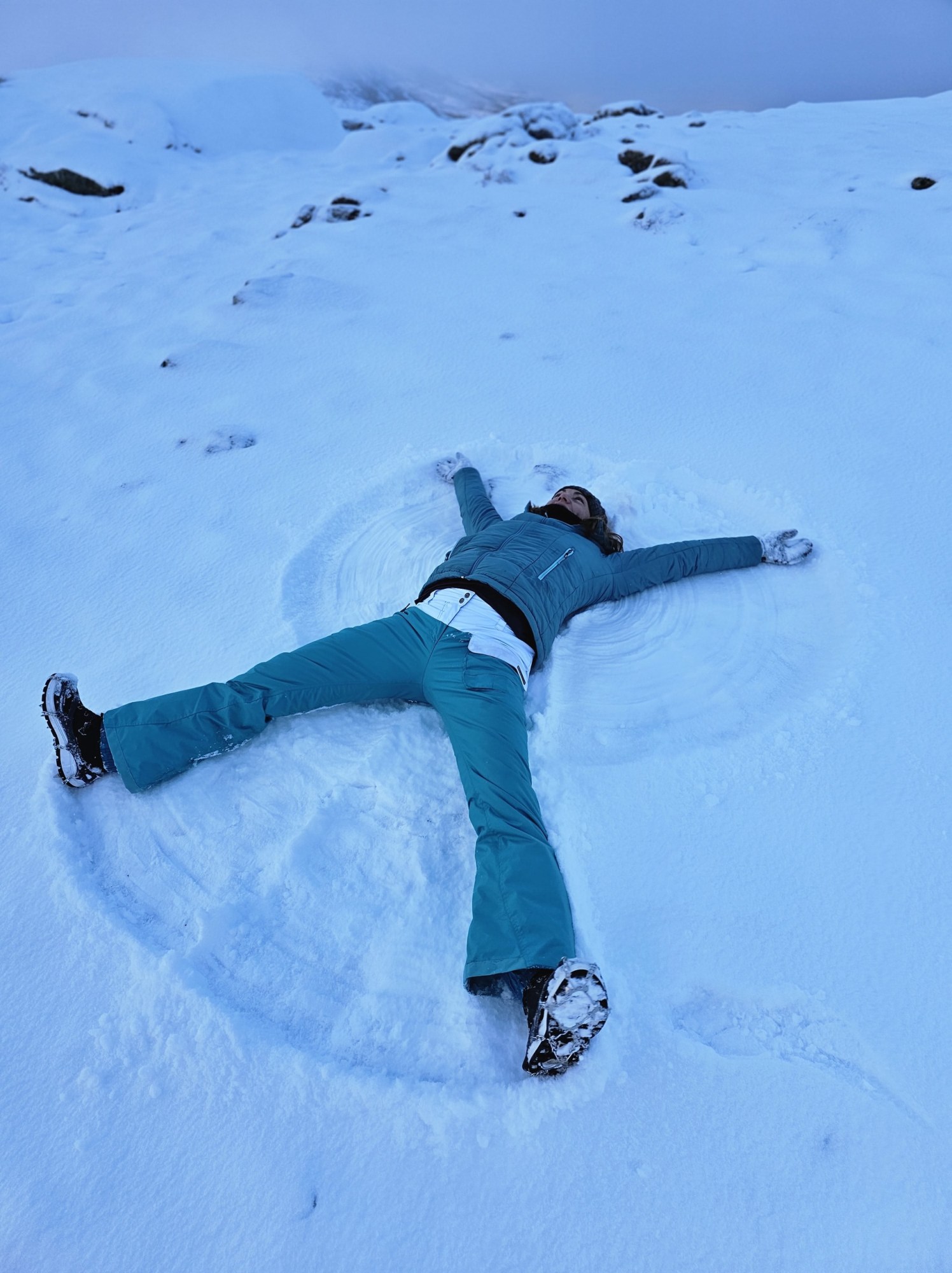
To stay warm on a Tromsø snowshoe hike, wear three layers, keep your hands and feet dry, and leave cotton at the hotel. A snowshoe hike is active, so most people feel warm while walking; it is the stops, the wind and damp clothes that make you cold.
The Arctic weather changes quickly, and the tour page for our Arctic Snowshoe Hike asks guests to dress in layers and wear winter shoes that keep them warm and dry. This guide goes beyond the basic list and explains how to manage warmth during the two to three hours you spend outdoors, from the first minute at the pick-up point to the drive home.
Quick facts: Arctic Snowshoe Hike
- Ages: Ages 10+ Recommended
- Duration: 4 Hours
- Seasonality: Winter
- Pickup location: Outside Clarion Hotel The Edge (look for a black Mercedes)
- Pick-up time: 10:00
- Group size: 2-8 guests (larger groups on request)
- Included: Transport in a Mercedes minivan; Local guide; Snowshoe & poles; Snacks and a hot drink
- Price: from NOK 1,500 (see live prices in the booking calendar)
The three-layer rule
Our FAQ gives a clear recipe, and it works because each layer does one job.
- Base layer: thermal underwear. Wool is best; synthetic is fine. It sits next to your skin and moves moisture away. Avoid cotton, which stays damp and does not keep you warm in Arctic conditions.
- Mid-layer: insulation. A wool or fleece top (and trousers if you feel the cold) traps warm air. This is the layer you add or take off as the day changes.
- Outer layer: a waterproof and windproof jacket and trousers. It keeps wind and snow out. Wind removes warmth faster than still cold air, so a shell is more important than extra bulk.
Choose layers that fit loosely enough to leave air between them. Tight clothing squeezes the warm air out and reduces circulation. Our fuller guide to what to wear on a snowshoe hike covers choices layer by layer.
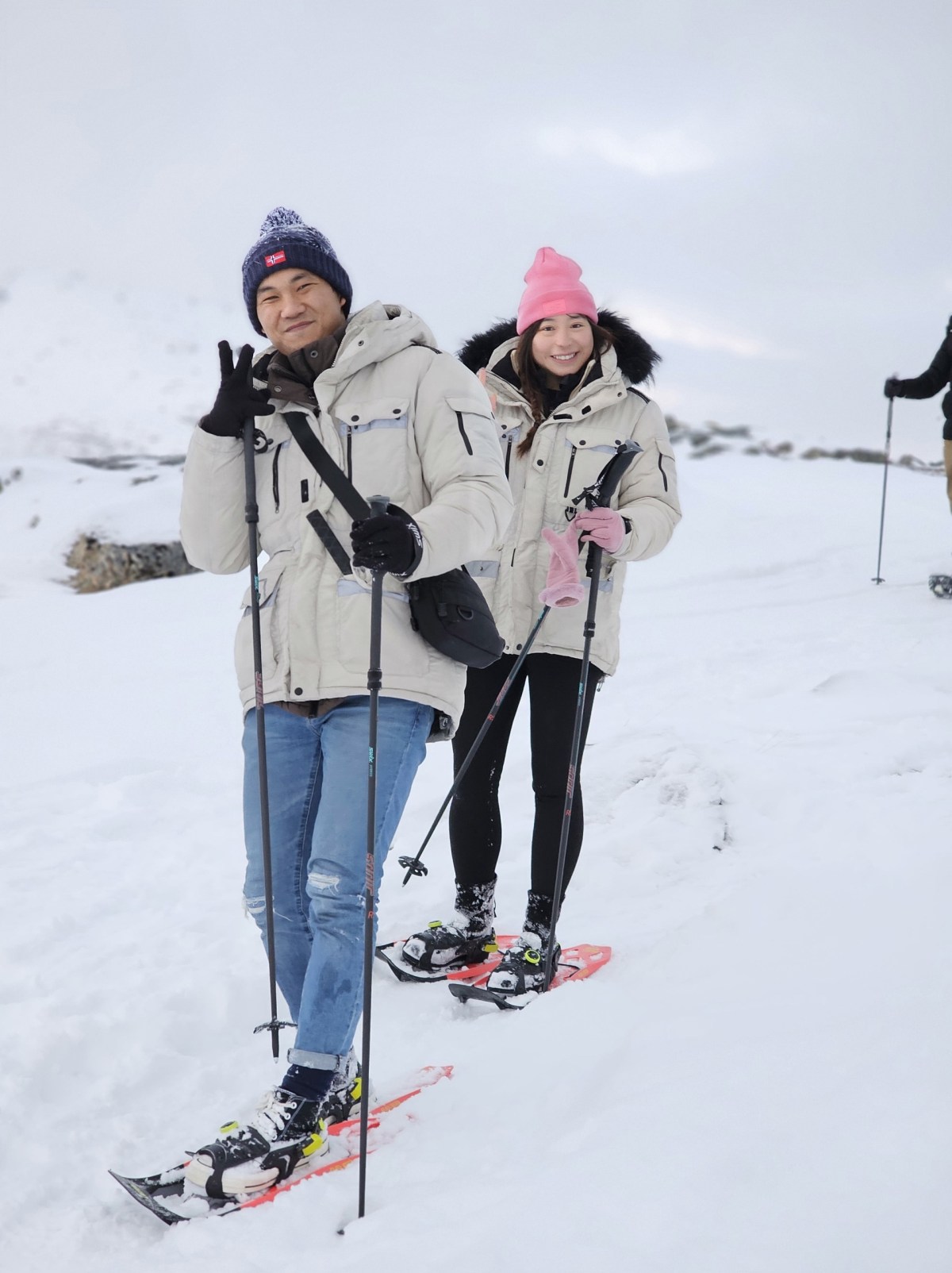
Hands: gloves, mittens and spares
The page lists a warm hat and gloves as recommended items; the FAQ mentions hat, scarf and mittens. Fingers get cold first because the body protects its core. A few practical points:
- Mittens are warmer than gloves because the fingers share heat. A thin liner glove underneath lets you use a phone without bare skin.
- Bring a spare pair in your bag. Damp gloves are cold gloves, and snow melts when you handle poles.
- Do not grip the poles hard. A relaxed hand keeps blood flowing, and the guide shows you how to hold them.
- Swing your arms or clench and open your fists when your fingers cool down.
The tour includes a hot drink, which is a good way to warm your hands at a stop.
Feet: the part that decides the day
The tour page asks for winter shoes or sturdy hiking boots suitable for snow and uneven terrain, and the FAQ says warm winter shoes. Cold feet are the usual reason people end a winter outing early, so spend your effort here.
- Boots must be dry before you start. Damp boots from yesterday are a bad start.
- Wear one good pair of wool socks, not three thin ones. Stuffing too many socks into a boot squeezes your foot and reduces warmth.
- Leave room for your toes. Boots that are too tight restrict circulation.
- Waterproof and insulated is the target. Trainers, even thick ones, let snow in.
- Keep trouser legs over the boot top so that snow does not slip in.
The snowshoes attach to your own boots, which is why the boots matter so much. Our snowshoe hike guide explains how the snowshoes and the day work.
Head, neck and face
A warm hat and a scarf are on both the tour page and the FAQ. An uncovered head and neck lose heat quickly, so cover them before you feel cold, not after. A neck gaiter or buff is a flexible alternative to a scarf and cannot trail in the wind. On bright days the snow reflects a lot of light, so sunglasses are optional on the page and often welcome.
Before you leave the hotel
Warmth starts at the hotel, not on the trail. A short routine saves you a lot of discomfort.
- Dress at the last minute. Sitting in the lobby in full winter gear makes you sweat before you have started.
- Eat something and use the toilet. A proper breakfast gives your body fuel to produce heat, and you will be away from the city for a few hours.
- Pack a small day bag. Include a spare pair of gloves, a spare layer, a snack and a water bottle, all of which are on or in line with the tour page’s optional list.
- Arrive on time. Be at the roundabout in front of Clarion Hotel The Edge at least five minutes before 10:00. Standing around in the cold is no way to start.
During the hike: manage warmth as you go
The itinerary has a 30-minute drive, two to three hours of hiking in an easy tempo and a drive back. The easy pace means you do not overheat much, but small habits still matter.
- Start slightly cool. Dress so that you feel a little cool in the first few minutes of walking. You will warm up quickly once you move.
- Open your jacket before you sweat, not afterwards. Sweat that cools on your skin is what chills you.
- Add a layer at stops. When the group pauses for a photo or a snack, put on your warm mid-layer or jacket hood straight away. Keep a spare layer in your bag.
- Drink and snack. Snacks and a hot drink are included. Eating and drinking warm things helps your body generate heat.
- Tell the guide early. If you are getting cold, say so. It is easier to fix a small problem than a big one, and the group is small.
Five common mistakes that make people cold
- Wearing jeans or cotton leggings. They soak up snow and moisture and stay cold. Choose waterproof outer trousers over thermal underwear.
- Overdressing at the start. Sweating inside a thick coat leads to a chill later.
- Tight boots with thick socks. More material but less warmth.
- Bare hands for photos. Use liner gloves, and take pictures quickly.
- Keeping everything in one outer pocket. Cold drains phone batteries; keep the phone close to your body.
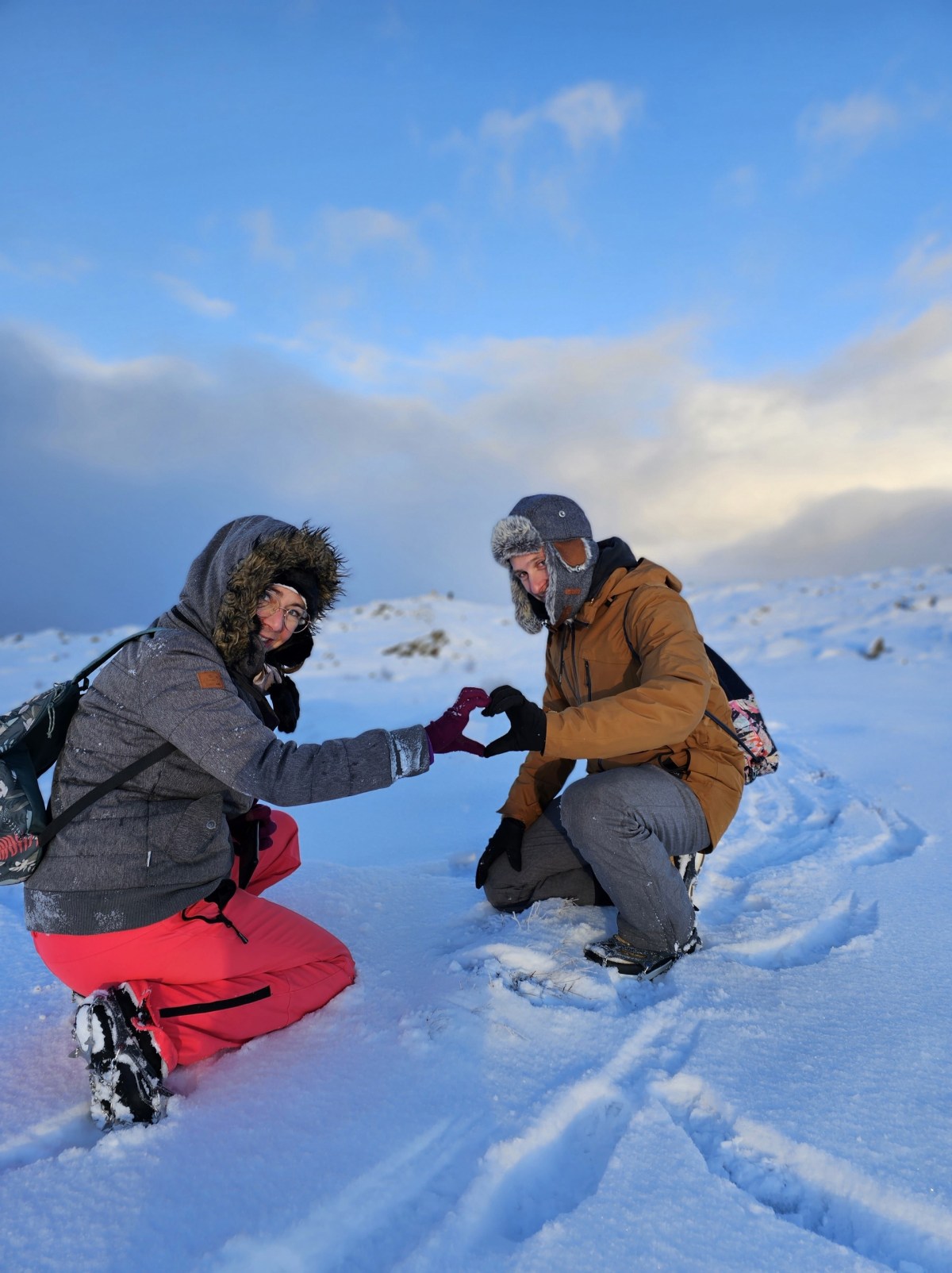
Wind, snow and bright sunshine: three kinds of cold
Not all cold feels the same, and each type asks for a slightly different answer.
- Wind. Wind makes the air feel colder than the thermometer says. A windproof outer layer and a scarf or buff over your lower face are your defence. Open ground and ridges are exposed; forest is calmer.
- Snowfall. Light snow is part of the winter day, and we operate in it. A hood that fits over a hat keeps your neck dry. Brush snow off your gloves before it melts.
- Sun and clear skies. Clear days can feel colder in the shade and surprisingly bright in the open. Sunglasses are on the optional list because snow reflects a lot of light.
If the weather is shifting, your guide will make the call on the day. Our post on winter weather and tours in Tromsø explains how we decide when to run.
What if I do not own the right clothes?
Our FAQ mentions that some tours include thermal suits and boots on very cold days, and tells guests to check their tour description. The Arctic Snowshoe Hike page lists snowshoes, poles, snacks, a hot drink, a guide and transport as included, but not clothing, so plan to bring your own warm layers and winter shoes. If you are travelling light, ask your accommodation or a local outdoor shop about buying or renting what you are missing before the day of your hike.
The Arctic dressing guide has more on building a winter wardrobe, and the December snowshoe hike guide covers what to expect in the coldest, darkest month.
Frequently asked questions
Will I be cold on a snowshoe hike?
If you dress in layers, most people feel comfortable while moving and need an extra layer at stops. The Arctic weather changes quickly, so proper clothing is essential for comfort.
What should I wear on my feet?
Winter shoes or sturdy hiking boots suitable for snow and uneven terrain, as the tour page recommends. They should be warm and dry.
Is cotton really that bad?
Yes. Our FAQ says wool layers are essential and that cotton does not keep you warm in Arctic conditions.
Is a hot drink provided?
Yes. Snacks and a hot drink are included in the price of the Arctic Snowshoe Hike.
Does the hike run in cold or snowy weather?
We operate in most winter weather, including light snow or wind. If conditions become unsafe, we cancel and offer a full refund or a rescheduled date.
Book your snowshoe hike
Dress well and the cold becomes part of the fun. Choose a date in the live booking calendar, pay securely online and arrive at the roundabout at Kaigata 6 in your warm layers.