
What to bring on the advanced snowshoe adventure
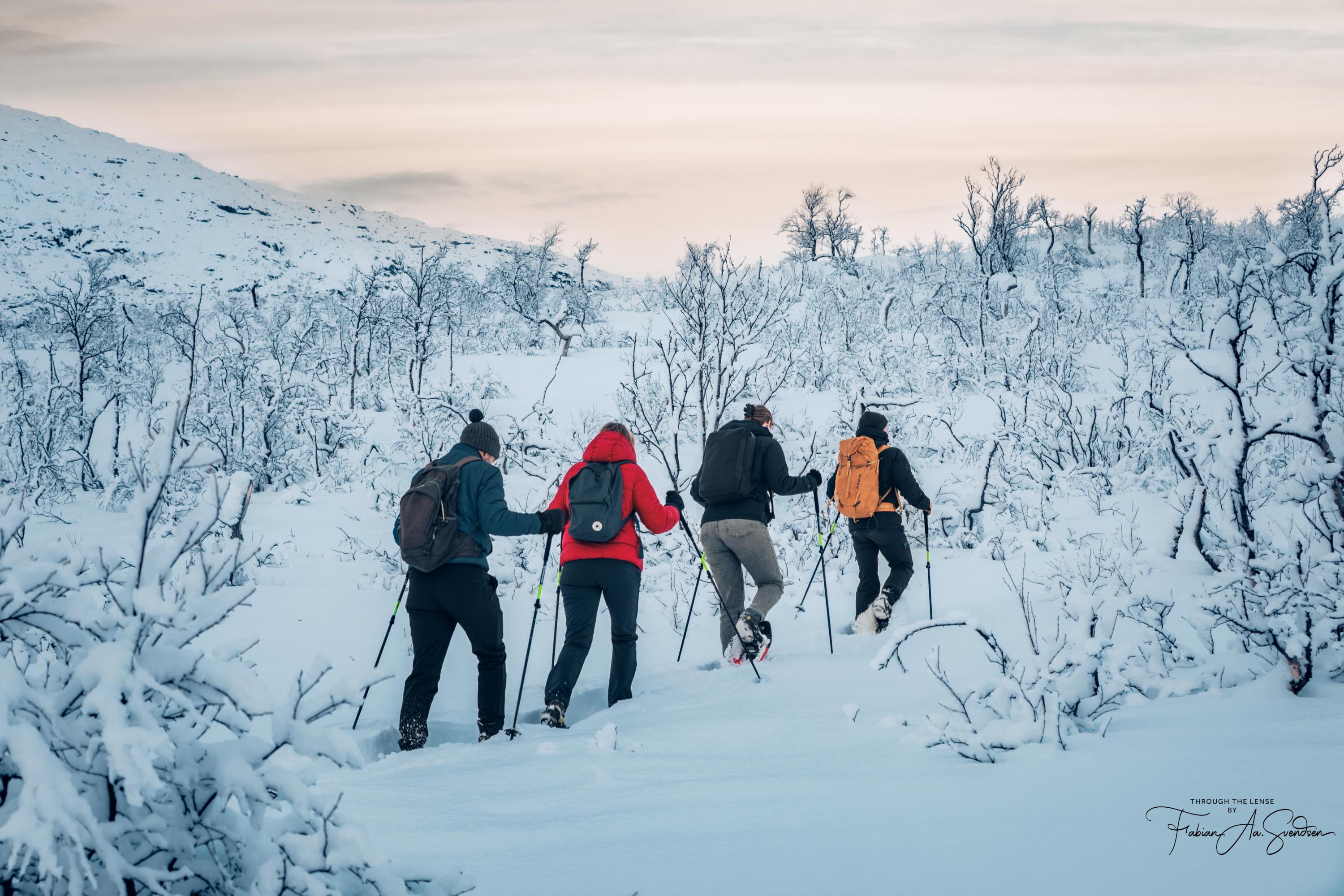
For the advanced snowshoe adventure in Tromsø, bring warm layers, sturdy winter boots, a hat and gloves — we supply snowshoes, poles, transport and lunch. That short list is the whole kit, but on a long day in snowy terrain the details of how you wear it matter more than what you carry.
This is a kit guide for our Arctic Snowshoe Adventure (Advanced), the longer and more challenging of our snowshoe tours. It is a six-hour outing including transfers, with four to five hours on snowshoes, so you will be outside for much longer than on a standard hike. Below: what is already covered, how to dress from skin to shell, what to put in a small pack, and the common mistakes we would like you to avoid.
Quick facts: Arctic Snowshoe Adventure (Advanced)
- Ages: Ages 16+
- Duration: 6 Hours (including transfer)
- Seasonality: Winter
- Meeting Point: Kaigata 6 Tromsø, Troms og Finnmark NO 9008
- Group size: Up to 8 persons
- Included: Transport in a Mercedes minivan; Local guide; Snowshoe & poles rental; Lunch and a hot drink
- Price: from NOK 2,100 (see live prices in the booking calendar)
What we provide and what you bring
The tour page is clear about what is included, so you can leave the specialist gear at home. Your guide gives a short introduction before the hike begins and fits you with the equipment.
| We provide | You bring |
|---|---|
| Transport in a Mercedes minivan | Clothing suitable for Arctic weather, worn in layers |
| A local guide | Winter shoes or sturdy hiking boots for snow and uneven terrain |
| Snowshoes and trekking poles | A warm hat and gloves |
| Lunch and a hot drink | Optional: camera or smartphone, snacks, a water bottle, sunglasses |
The left-hand column is what you do not need to buy, borrow or pack. The right-hand column is what the rest of this post is about.
Dressing in layers, from skin outwards
The Arctic weather changes quickly, and the tour page and our FAQ both give the same advice: dress in layers. For a day this long, think of the layers as a system you can adjust rather than a single thick coat.
- Base layer: thermal underwear, and wool is the best choice. Avoid cotton — it does not keep you warm in Arctic conditions.
- Mid-layer: an insulating layer such as wool or fleece.
- Outer layer: a waterproof and windproof jacket and trousers.
- Head and hands: a warm hat, gloves or mittens, and a scarf.
- Feet: warm, insulated winter shoes or boots (more on those below).
For a full head-to-toe explanation, our post on how to dress for the Arctic goes into more detail, and the snowshoe-specific clothing guide covers the standard hike.
Why the advanced hike changes how you dress
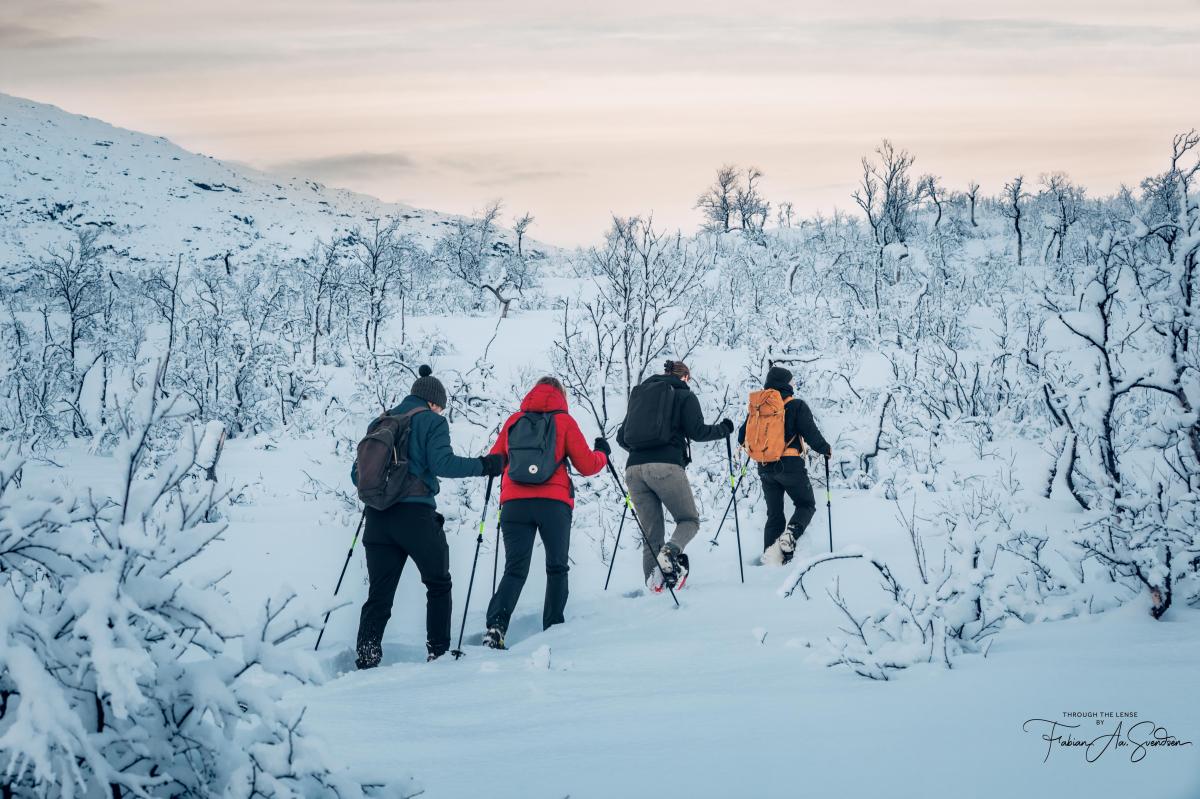
On the standard hike you walk for two to three hours. Here you are on snowshoes for four to five, across snow-covered forest and open mountain terrain, with a longer distance and more elevation. The pace is relaxed and there are plenty of breaks, but you are still working harder than on a gentle walk.
That has a practical consequence, and this part is general winter-hiking sense rather than a rule from the tour page: you will warm up while you climb and cool down when you stop. Layers that open, zip or come off easily are more useful than one heavy garment. Start the walk slightly cool rather than fully bundled — you heat up within the first few minutes — and add a layer at the breaks, especially on exposed ground where the wind reaches you.
Equally, do not under-dress because you expect to be moving. Lunch and viewpoint stops are part of the day, and standing still in the Arctic cools you quickly.
Boots: the one item worth getting right
The tour page asks for winter shoes or sturdy hiking boots suitable for snow and uneven terrain, and for this tour the word sturdy deserves attention. Snowshoes strap over your own footwear, so your boots do all the work of keeping your feet warm, dry and supported over several hours.
- Choose boots that are warm and waterproof, with a good sole for uneven ground.
- Wear socks that keep your feet warm without squeezing them — a tight boot restricts circulation and feels colder.
- If you are bringing boots from home, wear them in before you travel rather than for the first time on a six-hour day.
If you are flying with limited luggage, boots are the item to pack carefully rather than buy cheaply on arrival.
What to put in a small pack
Lunch and a hot drink are included, so you are not carrying a picnic. The tour page lists a few optional extras that make the day more comfortable:
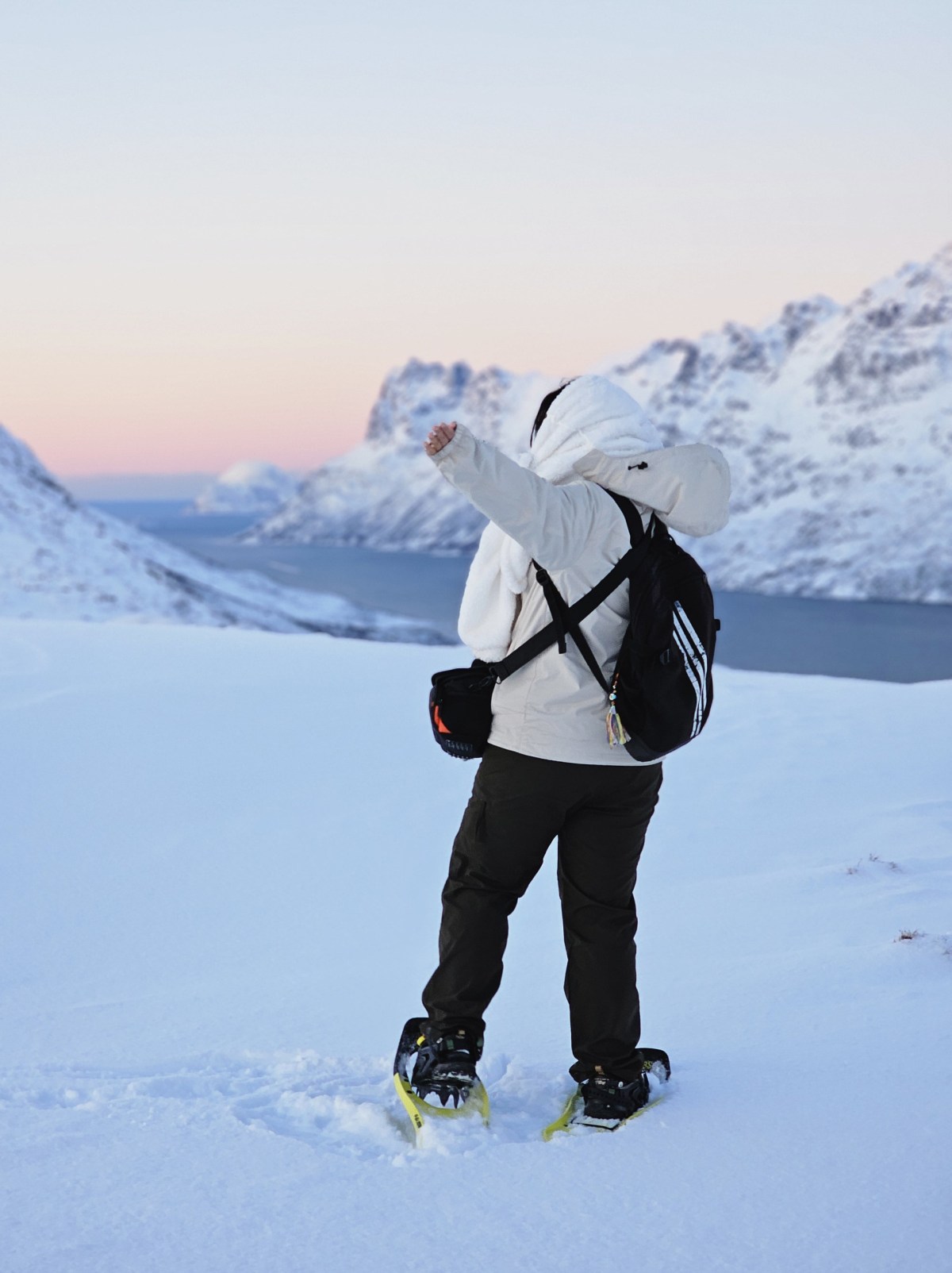
- Camera or smartphone — the route includes scenic viewpoints over fjords and snow-capped peaks, with plenty of chances to stop and take photos. Cold drains batteries faster, so keep your phone in an inside pocket between photos (a general tip).
- Snacks — if you like something on the way, in addition to lunch.
- A water bottle.
- Sunglasses — on bright winter days the snow can reflect a lot of light.
A small backpack is the simplest way to carry these, plus the layer you take off at the breaks. If you have dietary needs, tell us when you book: we can accommodate vegetarian, vegan (on request), gluten-free, lactose-free and most common food allergies, as long as we know in advance.
A simple night-before routine
The evening before, lay everything out in the order you will put it on: base layer, mid-layer, trousers, socks, boots, then shell, hat and gloves. Fill your small pack with the optional items, check that your phone is charged and that your booking confirmation is easy to find. In the morning, eat a proper breakfast and drink some water before you head to the meeting point at Kaigata 6 in the city centre; the booking calendar and your confirmation email have the start time for your date.
It also helps to decide in advance what you will wear if the weather is milder than expected. Because the hike is adapted to the weather and snow conditions, a few degrees warmer or colder should change which layers you take off, not whether you can enjoy the day.
Common kit mistakes
- Cotton next to the skin. Jeans and cotton T-shirts hold moisture and feel cold quickly. Wool or synthetic thermal layers are the answer.
- Fashion boots or trainers. They are not suited to snow and uneven terrain, and the tour page specifically asks for winter shoes or sturdy boots.
- Thin gloves only. Hands get cold first. Bring warm gloves or mittens, and consider a spare pair in your pack (general advice).
- No windproof layer. A warm jumper alone does not protect you on an exposed ridge. The outer shell is what stops the wind.
- Forgetting the food note. Dietary requirements are easiest when we know at the time of booking.
Is this the right hike for you?
The advanced adventure is designed for guests with a good level of fitness who are comfortable hiking for several hours in snowy terrain; the tour page lists ages 16+. If that sounds like more than you want, our standard Arctic Snowshoe Hike is shorter and beginner-friendly, and our snowshoe hikes page shows every option side by side. For a fuller comparison, read standard or advanced snowshoe hike.
Frequently asked questions
Do I need to bring snowshoes or poles?
No. The tour includes snowshoe and pole rental, and your guide gives a short introduction before the hike begins.
Is lunch included?
Yes. The price includes lunch and a hot drink. You are welcome to bring your own snacks and a water bottle if you like something extra on the way.
What should I wear?
Warm layers: thermal underwear, an insulating mid-layer, a waterproof and windproof jacket and trousers, warm winter shoes or sturdy boots, and a hat, gloves and scarf. Avoid cotton.
What if the weather is bad?
We operate in most winter weather, including light snow or wind. If conditions become unsafe, we cancel the tour and offer a full refund or a rescheduled date. The hike is also adapted to the weather, snow conditions and the group’s abilities.
Do I need to bring sunglasses?
They are optional, but on bright winter days the snow can reflect a lot of light, so they can make the day more comfortable.
What if I cannot make it?
Cancellations and changes must be made in writing. More than 48 hours before the start time you receive a 100% refund; within 48 hours the full amount is charged.
Book your advanced snowshoe adventure
With the kit sorted, the only decision left is the date. Groups are small, with up to eight guests, and you pay securely online in the live booking calendar. Choose a day, tell us about any dietary needs at checkout and pack your layers.